
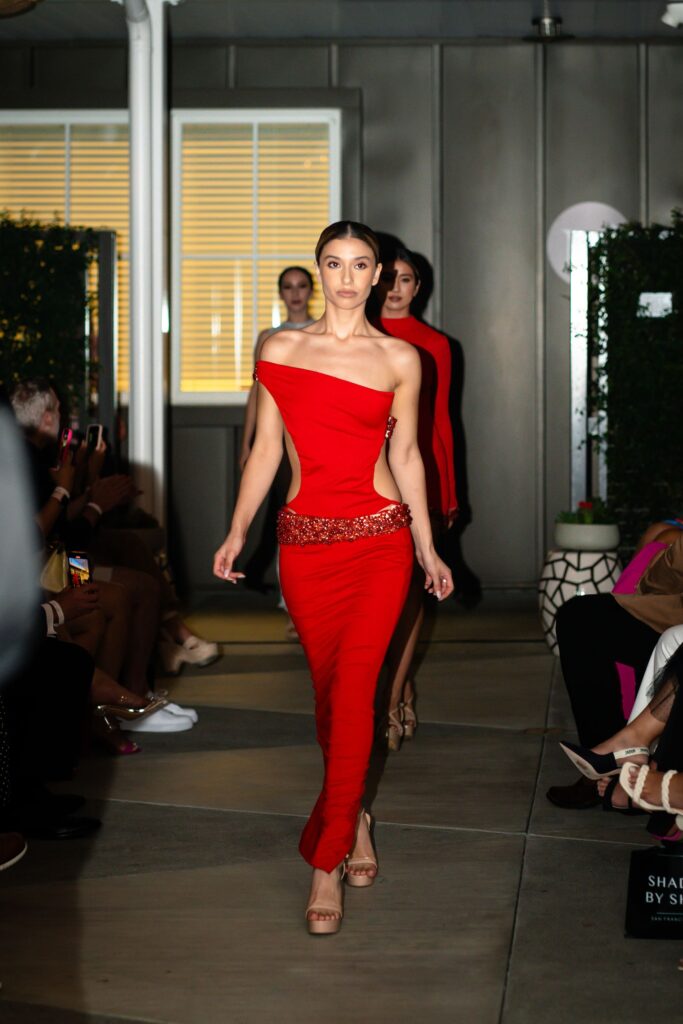
The short version
- A good runway walk starts with posture: tall spine, relaxed shoulders, chin level, eyes forward.
- Place each foot in a nearly straight line, lead with your hips and thighs rather than your head, and keep your arms loose.
- Your pace should feel steady and unhurried. Most beginners walk too fast and bounce.
- Practice in the shoes and clothes you will wear, film yourself, and fix one thing at a time.
- Castings judge your walk in seconds, so short daily practice beats occasional long sessions.
To walk a runway, stand tall with relaxed shoulders, keep your chin level and your eyes on a fixed point ahead, and step with one foot landing nearly in front of the other while your arms swing loosely at your sides. Move at a steady, confident pace, pause briefly at the end, turn cleanly and walk back with the same energy.
That description takes ten seconds to read and weeks to make look natural. The good news is that a runway walk is a physical skill, and physical skills respond to practice. This guide breaks the walk into parts, gives you drills for each one, and ends with a simple four week plan you can follow at home.
What makes a good runway walk?
A runway walk exists to show the clothes. Designers and casting directors look for a walk that is confident, consistent and controlled, so the garment moves well and the audience looks at the outfit rather than at awkward steps.
The key elements are the same whether you are walking a major show or a local boutique event:
- Posture: long spine, open chest, relaxed shoulders.
- Foot placement: a narrow track, with feet landing close to one line.
- Movement from the hips: the legs lead and the upper body follows calmly.
- Arms: natural, loose, close to the body.
- Face and eyes: neutral, focused expression with a steady gaze.
- Rhythm: even steps that match the music without bouncing.
Every designer has a preference. Some want a strong, fast stride and others want something softer. If you master the fundamentals, you can adjust to any direction a show gives you.
Step 1: Set your posture before you move
Most walking problems are really posture problems. Fix how you stand first.
- Stand with your back against a wall, heels a few inches away from it.
- Let the back of your head, shoulder blades and the back of your hips touch the wall lightly.
- Drop your shoulders down and away from your ears.
- Keep your chin parallel to the floor. Imagine a string pulling the top of your head toward the ceiling.
- Engage your core gently, as if bracing for a light tap to the stomach.
- Step away from the wall and keep that shape.
Hold this for 30 seconds, relax, and repeat a few times each day. The goal is a posture that feels tall but not rigid. If your shoulders creep up or your neck feels tight, you are trying too hard.
Step 2: Learn the footwork
Runway footwork is narrower than everyday walking. Instead of two parallel tracks, your feet land closer to a single line.
Foot placement
- Women’s walk (traditional): each foot lands roughly in front of the other, sometimes with a slight cross, which creates the classic hip sway. Do not overdo the cross, or you will look unstable.
- Men’s walk (traditional): feet stay closer to two narrow, parallel lines, with a longer, grounded stride and less hip movement.
- Your own direction: plenty of shows now cast for a personal walk rather than a strictly gendered one. Learn both, then use what suits the clothes and the brief.
Heel to toe
In flat shoes, land softly on the heel and roll through to the toe. In high heels, land a little more on the ball of the foot with the heel touching at almost the same moment, and keep your knees slightly soft. Lead with your thighs: think of your leg swinging forward from the hip, not your foot reaching out.
A simple drill
Put a strip of painter’s tape on the floor in a long line. Walk it slowly, landing each foot on or just beside the tape. Then walk it at normal pace. Then do it with a book balanced on your head to check that your upper body stays level.
Step 3: Arms, face and eyes
Once your feet are working, beginners tend to freeze everything above the waist. Here is how to keep it natural.
Arms
Let your arms hang naturally with relaxed hands, fingers loosely together. They swing slightly in opposition to your legs, close to the body. Avoid stiff, straight arms, clenched fists, or dramatic swinging. If a garment has pockets and the stylist allows it, a hand in a pocket can look relaxed.
Face
The standard runway face is neutral and focused, not angry. Keep your jaw loose and your lips gently closed. Some shows want a smile, especially commercial or bridal events, so always listen to direction.
Eyes
Pick a point at the end of the runway at eye level, often where the photographers stand, and keep your gaze on it. Do not look down at your feet or scan the audience. Steady eyes make you look confident even when you are nervous.
Step 4: Pace, music and the turn
Find your pace
Nerves make people rush. A good runway pace is steady and deliberate, with a slightly longer stride than everyday walking. Practice to music with a clear beat and let your steps settle into the rhythm without bouncing on each step. If a show is slow and moody, slow down; if it is upbeat, add energy without speeding up so much that you lose control.
The pause and turn
At the end of the runway, many shows want a short pause before the turn. The show’s director or choreographer will tell you exactly what they want, but here is a clean beginner version:
- Arrive at the end mark and stop with your weight evenly balanced.
- Hold for a beat or two (only if the show calls for a pose), keeping your eyes forward.
- Step one foot slightly across the other, then pivot on the balls of both feet.
- Walk back with the same posture and pace. Do not relax early just because you are heading backstage.
Practice the turn in both directions so you are ready for any layout.
A 4 week runway practice plan
Ten to twenty focused minutes a day will take you further than a single long session each week. Film yourself on your phone from the front and the side so you can see what the audience sees.
| Week | Focus | Daily practice |
|---|---|---|
| Week 1 | Posture and balance | Wall posture 3 times, 5 minutes walking a tape line slowly in flats, book on head for 2 lengths |
| Week 2 | Footwork and arms | Tape line at normal pace, relaxed arm swing, film a short clip from the front and review it |
| Week 3 | Shoes and pace | Practice in the heels or shoes you would wear at a casting, walk to music, add the pause and turn |
| Week 4 | Full walk and variety | Complete passes in different outfits and tempos, practice a neutral face, film and compare with week 1 |
Fix one thing per session. If your video shows hunched shoulders and a fast pace, work on shoulders today and pace tomorrow. Trying to fix everything at once usually makes the walk stiffer.
Common runway mistakes beginners make
- Looking down. It drops your chin and collapses your posture. Keep your eyes on your target.
- Bouncing. Usually caused by pushing off the toes too hard. Glide forward from the hips.
- Over-crossing the feet. It looks wobbly and can cause a stumble in heels.
- Stiff or swinging arms. Let them hang and move naturally.
- Rushing. Slow down. A calm pace reads as confidence.
- Wearing new shoes for the first time. Break in casting shoes at home, and scuff slick soles slightly for grip.
- Breaking character after the turn. Keep the walk going until you are fully out of view.
Walking at castings and go-sees
At a runway casting, you might walk only a short distance across a studio or down a hallway. Casting directors decide quickly, so your walk needs to be ready from the first step.
What to bring and wear
- Fitted, simple clothing in neutral colors so they can see your shape and movement
- Your best walking heels (for women’s castings) or clean, simple shoes, plus a backup pair
- Your comp card and digitals. See our guide to model digitals and comp cards
- Your portfolio if you have one. Our guide on how to build a modeling portfolio explains what to include
Where beginners find runway experience
Local boutiques, fashion schools, charity shows, bridal events and hair shows often use newer models and can be good practice. Check our listings of modeling auditions and the guide to types of modeling to see whether runway suits your look. Never pay a show organizer for the chance to walk, and be wary of “model training” packages that promise runway bookings. Our guide on how to spot a fake casting call lists the warning signs.
Frequently asked questions
How long does it take to learn a runway walk?
It depends on your starting posture and coordination. Many people see clear improvement within a few weeks of short daily practice, but making the walk feel natural in different shoes and tempos takes longer. Filming yourself speeds up progress.
Do I need runway classes?
Not necessarily. You can learn the fundamentals with practice, video and honest feedback. If you take a class, choose one taught by working professionals and be cautious of programs that charge a lot and promise bookings.
Should men cross their feet on the runway?
Traditionally, no. The classic men’s walk keeps the feet on two narrow parallel tracks with a longer, grounded stride. Shows vary, so follow the director’s instructions.
How do I walk in heels without wobbling?
Start in a lower, stable heel and build up. Keep your knees slightly soft, engage your core, avoid over-crossing your feet, and practice on different floor surfaces. Scuffing new soles helps with grip.
Can short models walk runway?
Major fashion week shows usually have strict height requirements, but local shows, boutique events, petite lines and commercial runway events can be more flexible. Building experience there is a realistic starting point.
Your next step
Once your walk feels steady, put together a simple set of digitals with our model digitals and comp cards guide, then check current modeling auditions for runway castings near you.