
The short version
- Face a window or a soft light, never a light behind you.
- Film horizontal at eye level, framed from mid chest up.
- Record in a soft, quiet room because bad sound hurts more than average video.
- Use a plain background and a reader beside the camera.
Self-tapes are now one of the most common ways to audition. Casting sends you the sides, you record the scene at home, and you upload it by a deadline. You do not need a studio. You need a phone and control over four things: light, framing, sound, and background.
1. Light: face the window
The easiest good light is free. Stand facing a window during the day so soft light falls evenly on your face. Avoid having a window or lamp behind you, which turns you into a silhouette. If you film at night, a ring light or a single softbox in front of you, slightly above eye level, works well. Turn off overhead lights that cast shadows under your eyes.
2. Framing: chest up, phone sideways
- Turn your phone horizontal unless casting asks for vertical.
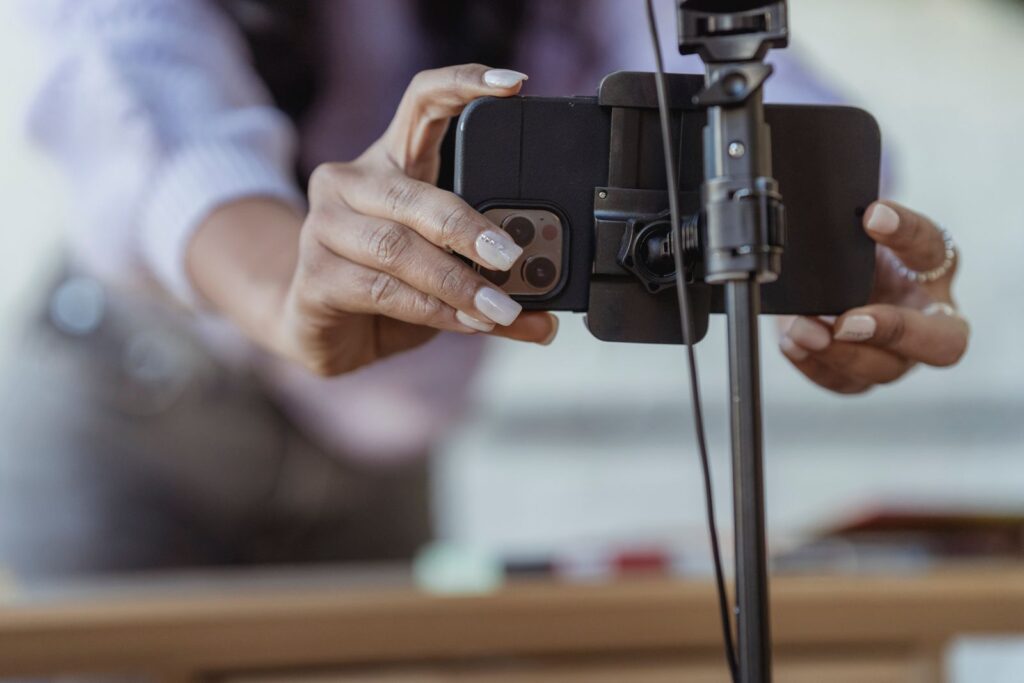
- Put it on a tripod or a stack of books at your eye level.
- Frame from about mid chest to just above your head.
- Use the back camera if you can, since it is usually sharper. Ask a friend to check focus.
3. Sound: soft rooms are quiet rooms
Echo makes tapes sound amateur. Record in a room with carpet, a bed, curtains, or a couch. Turn off fans and air conditioning while you record, and silence notifications. If you can, add an inexpensive clip on microphone. Casting will forgive average video before they forgive bad sound.
4. Background: plain and boring
A solid wall in a neutral color like gray, light blue, or off white is perfect. No posters, shelves, or doorways. If your walls are busy, a simple collapsible backdrop or even a smooth, ironed sheet can work.
Your reader
Have someone read the other lines from just beside the camera. They should read clearly and a little quieter than you. Your eyeline goes to them, not into the lens. No one around? Some actors use a video call with a friend.
Performance tips for tape
- Keep movement small. The camera sees everything.
- Listen to your reader and react. Tapes that feel alive usually have real listening in them.
- Do a few takes and pick the most honest one.
- Do not add music, filters, or edits unless casting asks.
Slate and upload
Follow instructions exactly. Casting may want the slate at the start, as a separate clip, or not at all. Name the file the way they ask, check that it plays, and submit before the deadline.
Budget setup checklist
- Phone with a clean lens
- Tripod or stable stand
- Window light or one soft light
- Plain wall or backdrop
- Quiet, soft room
- A reader
Quick answers
Can you self-tape with an iPhone or Android phone?
Yes. Recent phones shoot more than enough quality for self-tapes. Light and sound matter much more.
What background color is best for a self-tape?
A neutral solid color such as gray, light blue, or off white.
Should I look into the camera?
Usually no. Look at your reader just beside the lens unless casting says otherwise.
Do I need a ring light?
Not if you have good window light. A ring light or softbox helps when you record at night.
Keep going: read the beginner’s playbook, or browse more Insights.
By the Acting Modeling Auditions team. Updated September 2026.
Our Self-Tape Gear Picks
- Ring light with phone holder: soft, even light on your face
- Phone tripod with remote: steady, eye-level framing
- Wireless lavalier mic: clear dialogue without echo
- Collapsible backdrop: the plain background casting asks for
As an Amazon Associate we earn from qualifying purchases.